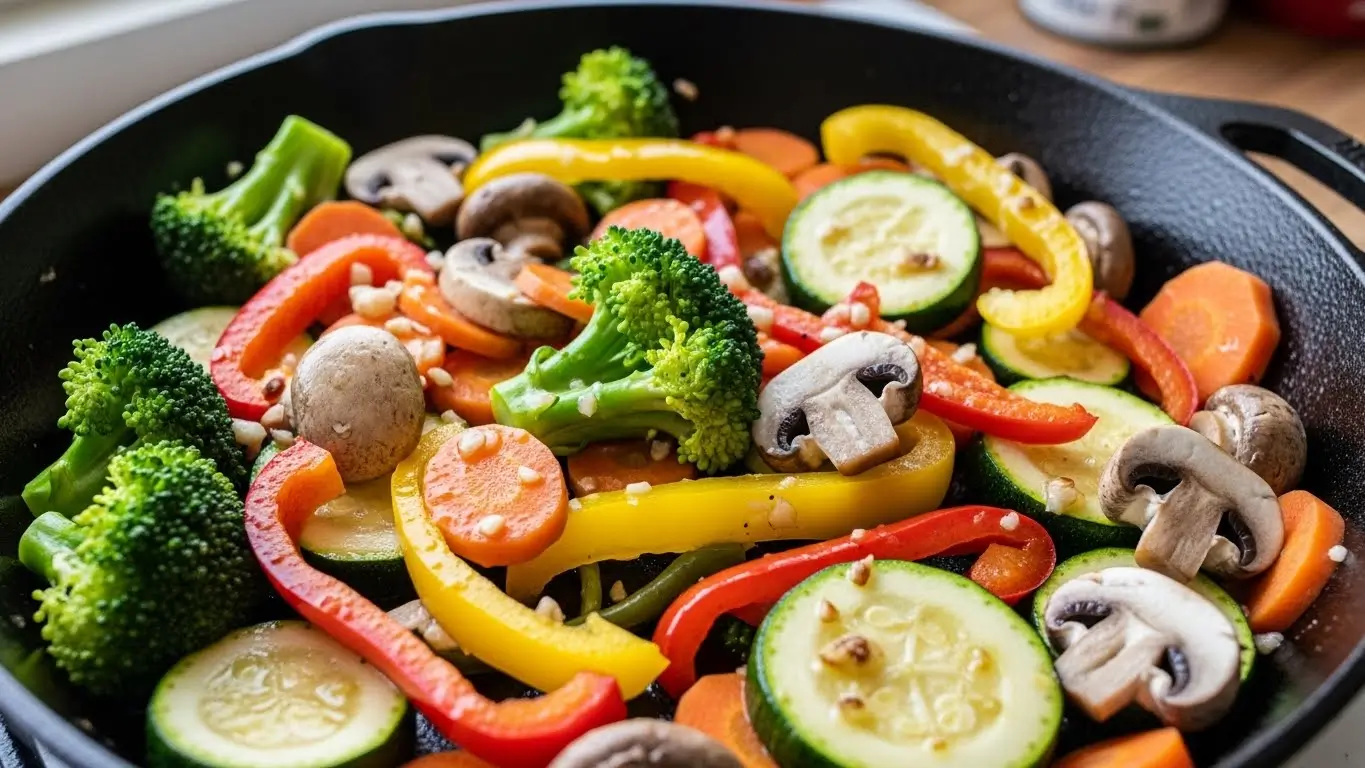
Look, sautéed vegetables should be simple, right? Wrong. At least that’s what I thought until I spent basically three months making mushy, flavorless veggies that my kids wouldn’t touch with a ten-foot pole.
I’m gonna be honest… I burned garlic at least five times before I figured out the whole timing thing. And once—this was embarrassing—I tried to sauté frozen broccoli without thawing it first. Disaster. Complete disaster.
But now? Now I can make crispy tender sautéed vegetables that actually taste good, and my neighbor keeps texting me asking “what’s that amazing smell coming from your kitchen?” (It’s garlic butter. Always garlic butter.)
Table of Contents
How To Sauté Vegetables (The Real Way)
Here’s the thing nobody tells you about sautéed vegetables recipe methods online—most of them skip the crucial part about WHICH vegetables to add WHEN. Because apparently everyone just assumes we all know that carrots take forever while zucchini turns to mush in like 3 minutes.
The secret? It’s all about cooking order and—wait, I forgot to mention—you absolutely need a big enough pan. I tried cramming everything into my small skillet once and ended up steaming the veggies instead of sautéing them. Not the same thing. Trust me on this one.
Why This Easy Sautéed Vegetables Method Works
Medium-high heat. That’s it. That’s the magic number. Around 350°F if you want to get technical about it. Too low and you’re basically steaming. Too high and… well, remember that burned garlic I mentioned? Yeah.
And butter at the end, NOT the beginning. I learned this the hard way when all my butter turned brown and bitter before the vegetables were even done cooking.
My 10-year-old who literally refuses to eat anything that’s “too healthy looking” actually requests these vegetables now. So I guess I did something right.
What You Need For Perfect Sautéed Vegetables
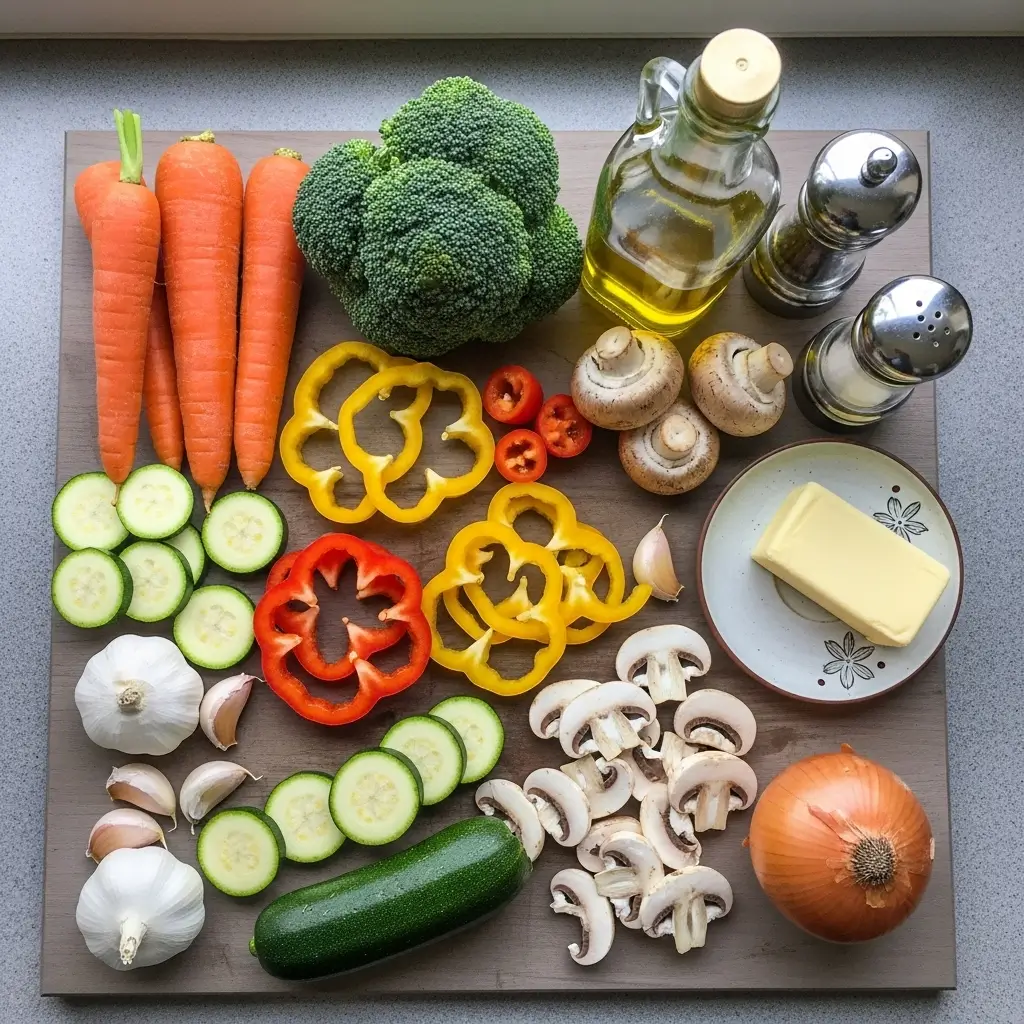
The Vegetables (Pick Whatever You Like):
- 2-3 medium carrots, cut into thin sticks or coins
- 1 medium onion, sliced (yellow or red, doesn’t matter)
- 1 red bell pepper, cut into chunks
- 1 yellow bell pepper, cut into chunks
- 2 cups broccoli florets (small pieces cook faster)
- 2 cups cauliflower florets
- 2 medium zucchini, halved and sliced (add this LAST or it gets mushy)
- 8 oz mushrooms, sliced (I love baby bellas)
Shopping tip: Buy whatever vegetables are on sale, honestly. This isn’t rocket science. Just avoid those sad, wilted ones at the bottom of the produce bin.
The Flavor Makers:
- 2-3 tablespoons olive oil (or avocado oil if you’re fancy)
- 2 tablespoons unsalted butter
- 4 cloves garlic, minced (the recipe says 3 but I’m obsessed with garlic, so…)
- Salt and pepper to taste
- Optional: fresh parsley, Italian seasoning, red pepper flakes
Step-By-Step: How To Make The Best Sautéed Vegetables
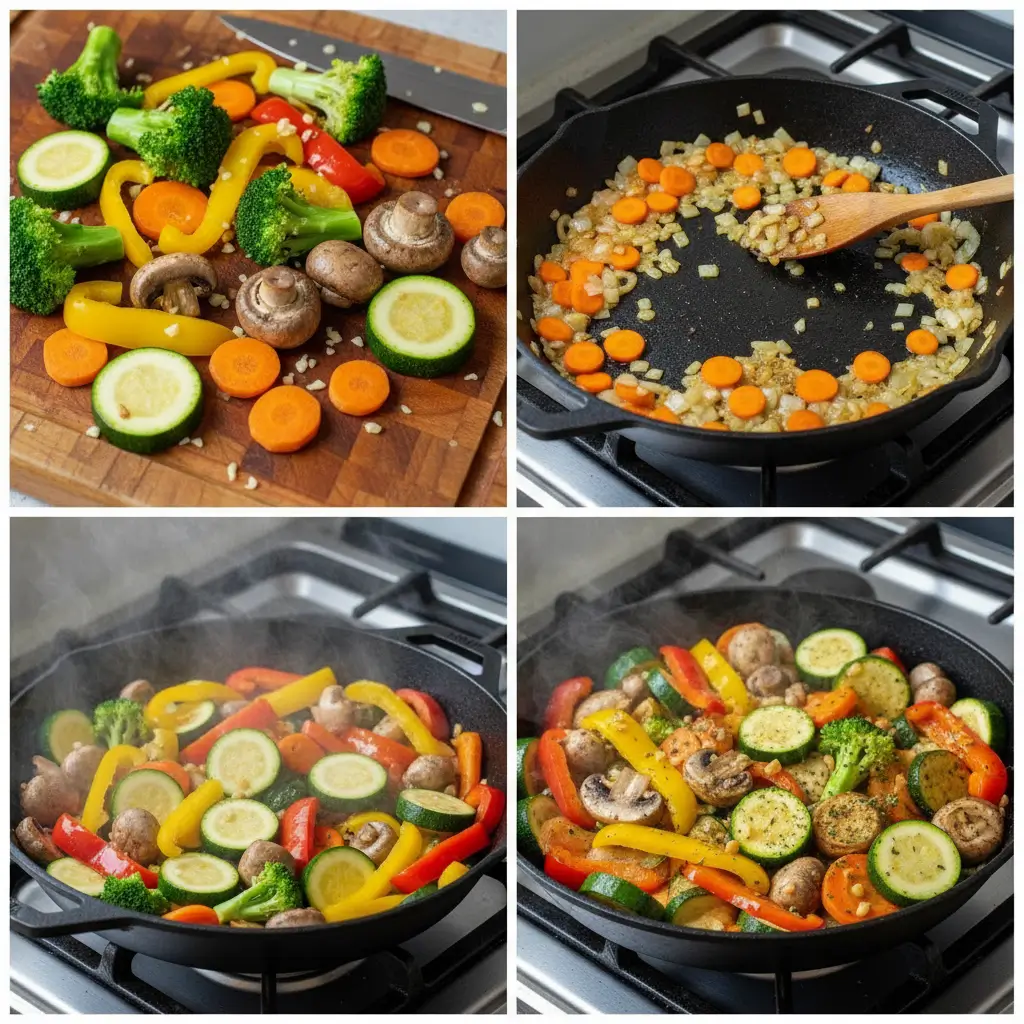
Step 1: Get Your Prep Work Done (Because Multitasking Is A Myth)
Cut everything BEFORE you start cooking. Seriously. I tried doing this while cooking once and burned the onions because I was too busy chopping bell peppers.
Make sure your pieces are similar sizes. Otherwise you’ll have some pieces that are perfect and some that are still basically raw. Been there, done that, served it to my husband who gave me “that look.”
Step 2: Start With The Hard Stuff
Heat your big skillet or sauté pan over medium-high heat. Add the olive oil and let it get shimmery—that’s how you know it’s hot enough.
Toss in the carrots and onions first. These take the longest—about 10-15 minutes—so they get a head start. Stir occasionally but NOT constantly. If you keep stirring, they won’t brown properly.
You want them to get a little caramelized and sweet. That’s the good stuff right there.
Step 3: Add The Medium Veggies
After about 5 minutes, add your bell peppers, broccoli, cauliflower, and mushrooms. These guys need about 6-8 minutes.
Keep that heat medium-high. The pan should be sizzling. If it’s not making noise, your heat is too low.
Stir every couple of minutes. You want some brown spots (that’s flavor!), but you don’t want anything burning.
Step 4: Zucchini Comes Late To The Party
About 3 minutes before everything’s done, add your zucchini. This was a game-changer when I figured it out. Zucchini is basically 90% water and cooks super fast.
Add it too early and it turns into mush. Ask me how I know. Actually, don’t.
Step 5: The Garlic Butter Magic (Do NOT Skip This)
Now—oh wait, this is important—reduce your heat to medium-low.
Push all the veggies to the sides of the pan to make a little space in the middle. Drop in your butter and let it melt.
Add the minced garlic right into that melted butter and let it cook for about 1 minute until it smells AMAZING. It should be fragrant but not brown. Brown garlic = bitter garlic = ruined vegetables.
Stir everything together so all the veggies get coated in that buttery garlicky goodness.
Season with salt and pepper. Taste it. Add more salt if needed (it probably needs more salt).
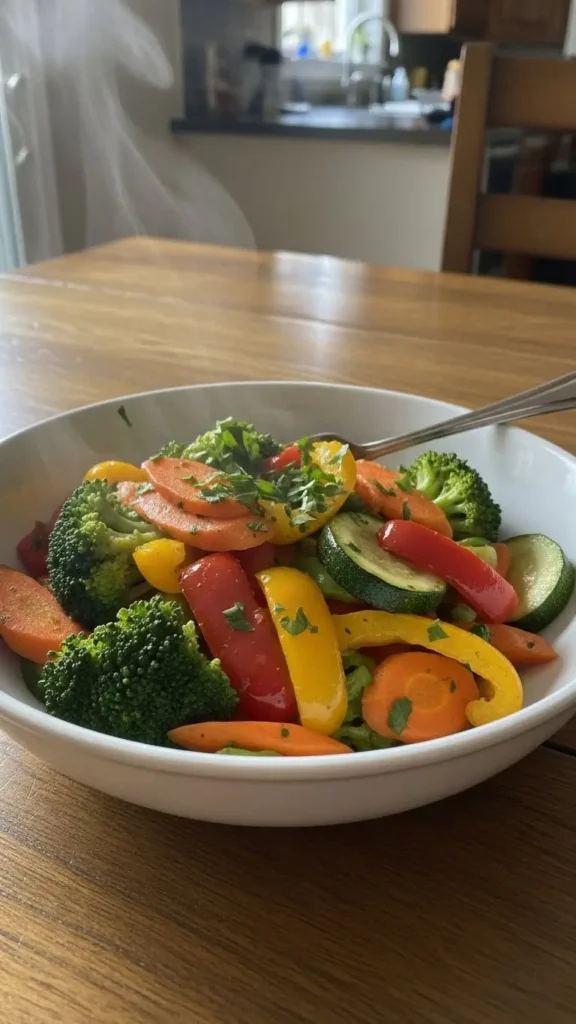
Tips For Healthy Sautéed Vegetables That Don’t Suck
Want Them More Crispy?
Don’t overcrowd your pan. Seriously. Use two pans if you have to. When vegetables are packed in too tight, they steam instead of sauté.
Also? Don’t stir too much. Let them sit and develop those brown spots.
For Garlic Herb Sautéed Vegetables:
Add some Italian seasoning or herbs de Provence with the garlic. Or go wild with fresh thyme, rosemary, or basil at the end.
I sometimes throw in a squeeze of lemon juice at the very end. Brightens everything up.
Making Vegan Sautéed Vegetables:
Just skip the butter or use vegan butter. Use extra olive oil instead. Still delicious, I promise.
Mediterranean Sautéed Vegetables Version:
Add some cherry tomatoes in the last 3 minutes. Throw in some olives and feta at the end. Boom. Mediterranean vibes.
Asian-Inspired Stir Fry Vegetables:
Use sesame oil instead of butter. Add ginger with the garlic. Finish with a splash of soy sauce and sesame seeds.
Actually, you know what? This might be my favorite variation. The sesame oil really takes it to another level.
What To Serve With This Simple Sautéed Vegetables Side Dish
These are perfect with literally anything:
- Grilled chicken or steak
- Baked salmon (my go-to Tuesday night dinner)
- Pasta (toss them right in with some parmesan)
- Rice or quinoa for a quick sautéed vegetables dinner recipe
- Eggs for breakfast (don’t judge me, leftover sautéed veggies with scrambled eggs is AMAZING)
My husband likes to eat them straight from the pan while standing at the stove. Men are weird.
Common Mistakes (That I Definitely Haven’t Made Multiple Times)
Using too much oil: The vegetables should glisten, not swim. I learned this when I basically deep-fried my vegetables by accident.
Not drying your veggies: If they’re wet from washing, they’ll steam. Pat them dry with paper towels first.
Adding salt too early: It draws out water and makes them soggy. Salt at the end.
Cooking everything together: Different vegetables need different cooking times. This isn’t a dump-and-go situation.
Low heat: You want sizzle and browning. Low heat gives you sad, limp vegetables.
The Verdict On This 20 Minute Sautéed Vegetables Recipe
This has become my default healthy sautéed vegetables side dish for weeknights. It’s ready in about 20 minutes from start to finish, uses whatever vegetables I have lying around, and actually tastes good.
Even my picky kids will eat them. Well, most of the time. They still give me attitude about the mushrooms, but whatever. Can’t win them all.
The garlic butter sautéed vegetables version is definitely my favorite, but you can play around with the seasonings and make it your own. Sometimes I add a pinch of red pepper flakes if I’m feeling spicy. Literally.
Anyway, give this a shot and let me know what vegetables you use! Are you team broccoli or team no-green-things-ever? My kids are firmly in the second camp, but I’m working on it.
Happy cooking! (And remember: medium-high heat and don’t burn the garlic.) 🥕🥦
[Recipe_Card]